Analysis of China's Power Development and Reform Situation (2020)
Source: Energy Research Club WeChat Official Account Authors: Zheng Xuguang, Wang Xuechen, Zhao Juntao
In 2019, China’s economy maintained overall stability and steady progress. The Statistical Communiqué on National Economic and Social Development in 2019 released by the National Bureau of Statistics in late February showed that the gross domestic product (GDP) reached 99.0865 trillion yuan, an annual increase of 6.1%. Converted at the annual average exchange rate, China’s GDP totaled $14.4 trillion, ranking second in the world, with per capita GDP exceeding $10,000. Both the total GDP and per capita level reached new historical milestones.
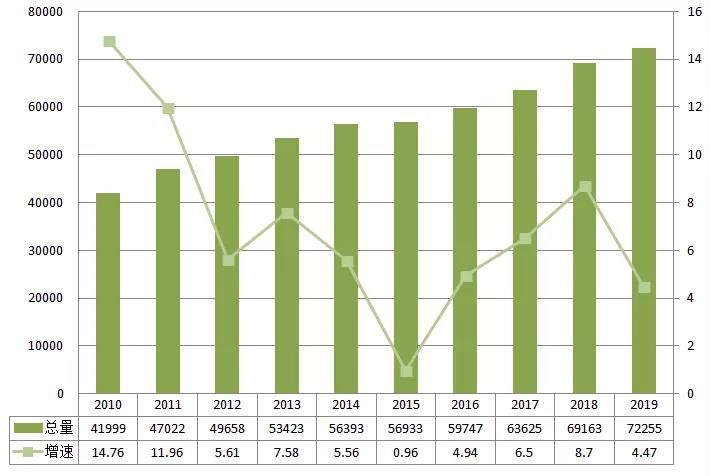
In 2019, China’s total social electricity consumption grew steadily, with continuous optimization of the consumption structure. A 4.5% growth in power consumption supported a 6.1% growth in the national economy. The total energy consumption for the year was 4.86 billion tons of standard coal, an increase of 3.3% over the previous year, with the growth rate remaining unchanged from the previous year. The growth rate of power consumption fell by 4 percentage points compared to the previous year. The power installed capacity exceeded 2 billion kilowatts, the power production and supply capacity continued to increase, the power source structure was further optimized, and the power supply service quality steadily improved, but the growth rate of power installed capacity and grid scale slowed down. The power supply and demand situation continued to be generally balanced.
In 2019, energy conservation and emission reduction in the power industry were further advanced. The national average power supply coal consumption, line loss rate, and pollutant emission levels all steadily declined, and the proportion of ultra-low emission retrofits for coal-fired power units was further increased. With the deepening of the domestic carbon market construction, the pressure on carbon management in the thermal power industry increased.
In 2019, new progress was made in the reform of the power system. The second round of cost supervision and review for transmission and distribution pricing was launched, the proportion of market transaction electricity increased further, the scope of the power auxiliary service market was expanded, and the system peak regulation potential of approximately 65 million kilowatts was tapped. All pilot projects for the construction of power spot markets entered settlement trial operations, the pilot projects for the reform of incremental power distribution business were expanded, and the fifth batch of pilot project applications was launched. The power business environment was continuously optimized, and social electricity costs were reduced by nearly 100 billion yuan.
Looking ahead to 2020, China will comprehensively build a moderately prosperous society in all respects and achieve the first centenary goal. At present, the pressure of economic downturn, coupled with the impact of the COVID-19 pandemic, has led to downward adjustments in economic growth expectations at home and abroad, which will undoubtedly further reduce electricity consumption growth expectations, making the internal and external environments for power development more complex. However, on the whole, the long-term positive fundamentals of China’s economy have not changed, and the momentum of high-quality development in the power industry will continue.